Thursday, December 30, 2010

Why I'm Not Writing a Best Films of 2010 List...yet

So, it's December 30th, one more day until the new year, which means that the nation as a whole is going to now spend the better part of January discussing 2010 and all of the good and bad things that happened this year. Because I am a critic, I always gravitate towards the top pop culture items of the year, whether they be films, books, albums, you name it. But, generally speaking, I will spend the majority of the time reading about the year's top films, which makes perfect sense.

But I am going to be honest with you: I love/hate compiling an annual list of top films.

Why, you may ask? Take it from someone who reviews films as a hobby but also with the intent of finding the best films of the year/finding films I genuinely love and respect. Films I give positive reviews for might not be up to snuff with the general public, which I don't care about, but believe me, a personal opinion can be quite dangerous. If I leave out film X, the fans of that movie will most likely kick and scream about how I neglected their precious movie. I do enjoy discovering that one film that everyone adored that I disliked, but when you find a fan of a film, they aren't going to sit easy knowing there are naysayers afoot.

But the main reason I refuse to produce a list of my favorite films of 2010 is simply because I have not seen all of the films on my must watch list, and I have a strong feeling that after viewing the five films I have left to review, my list will change drastically. Four of the five directors I have great respect for, even consider personal favorites. All five films have actors worth watching, and I wouldn't be able to sleep knowing that I'm ignoring their wonderful and well made films.

Now, we have our debate. If it's December 30th, and I haven't seen True Grit yet, should I even give it a spot on the best of 2010 list, or save it for next year? I'm going to say no, if only for the fact that the film came out this year. However, I know friends who would argue otherwise. I also am different in that I count films that did not receive very wide releases, another problem that remains controversial among film critics I know. Having thought long and hard about which film should take the title of Best of 2010, I weighed in the fact that very few people could have seen the film in question, and that it would be hard to count a film that was near impossible to find. Again, while friends of mine who review movies may disagree, I believe it is fair to include a film that was not widely released because it still had an audience and caused enough of a reaction in me to warrant a spot on the list.

So, here I am. Having just spat out random thoughts and ideas for five minutes, I believe that I have justified myself and can promise you an official best of 2010 list come Oscar season. If you know me, you probably already have an idea as to which films will occupy the top slots on the list. If not, well, you can expect a very different group of films from your average list.

Thursday, November 4, 2010

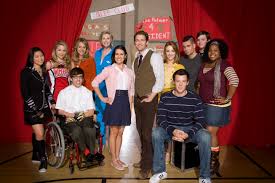
"Gleeks" of Nature: Notes from a Former 'Glee' Fan on Why the Show is Terrible...and Must Stay on the Air

Hello, my name is Kamikaze Feminist, and I am a former 'Gleek'.

Why did I love it so much, you may ask. What separates Glee from the rest of the bad TV shows/musicals/teen dramedies? Trust me, I have answers to all of these questions and more, but first, let me tell you a story about the rise and decline of what could have, and should have been, the most fun show on television.

To anyone who watched the initial pilot for Glee, the show they saw was not only shining with brilliance and wit, but it had enough of an underdog story that it felt like it was going to be perfect from season to season. At least, this is what I concurred, because even though the first episode was not 100% perfect, it came close enough and had enough songs thrown into the mix that I could negate the minor issues and come to love it. And you'd have to be a sourpuss to not let out a guffaw upon hearing a high school glee club belting Amy Winehouse's song "Rehab."

The pilot was smartly aired months in advance of the actual show, which left the producers enough of a window of time to generate buzz and get viewers excited to see the rest of the season. They would later employ similar tactics when handling the mid-season break, causing viewers who had invested hours on the show to pine impatiently for the second part of the season, while newcomers who missed it during its initial run were able to catch up in time for the Part 2 premiere.

By the time the official first episode of Glee hit the airwaves, my musical theater loving heart and soul were lifted to new heights come September when I was lucky enough to feel the loud strains of-

Auto tune. Fucking auto tune.

I don't know if there was always computer magic behind the scenes of the show, or if there was supposed to be, the point is, no matter who you have cast in singing roles for a TV show, oh, all about singing, if they sound like pitch perfect robots, then what fun is there in creating a show at all? And it's not like the kids were all musical theater illiterate; Lea Michele, among other cast members, has been on Broadway, and her character is supposed to be a talented but cocky diva in the body of a mini Barbara Streisand. So why in the hell are they looping her natural pipes with a computer?

Granted, the auto tune was not a huge problem in the beginning for me, but was most definitely a sign of things to come. While Glee suffered from some missteps along the way, and could get a tad trite, stereotypical even, there was always Jane Lynch to spice up the action and spit out one liners with the growl of an errant bulldog. Combine that with guest stars like Kristen Chenowith, and the flaws could crawl back into a corner. At least, for the first half of the season.

What made Glee bad? Well, my friends, consider this: When you have a show that centers itself around a high school glee club, as I mentioned earlier, computers and digital singers are a big faux pas. Also, when you spend the entire season following the exact same shtick, committing yourselves to jokes and ideas that should have been used sparingly, because that was their purpose all along. You can tell a joke that is absolutely hilarious, but when you use that joke and its punchline in frequent succession, just because it worked before, how do you expect to enthrall an audience for an entire season?

Take for example the song choices. Granted, the original idea for the show felt like the love child of Election's Tracy Flick and High School Musical, so when you are going to try and add snark and bite to an otherwise hokey concept, it is not such a bad idea to pick songs that are just that, unexpected for a high school glee club to perform (or a teacher for that matter. Seriously, what high school student wants to hear their teacher perform 'The Thong Song'? Creepy if you ask me.) While it is great to pick songs that are original and catchy, the point of captivating viewers should not have to be awkward hip hop/pop for the sake of awkwardness. If every episode features a group of peppy teens singing 'Baby Got Back' it becomes expected. And to play devil's advocate here, quite a handful of the episodes strive to find songs that are less predictable and will still entertain viewers, but unfortunately, the Glee staff appears to be on a road where the show now feels targeted to teenagers and teenagers only. And while being edgy and hip with the kiddies is fun and all, it cuts out a demographic that may need Glee for a number of reasons, parents. But I'll get into detail on that in a minute.

In addition to predictable song choices and cliches of that nature, the plot development, along with the character traits, was what also led Glee down a dark and unforeseen path. Sure, Sue Sylvester is a hoot, in moderation, and yes, it is enjoyable to see the writers use Sue as a bully, a jokester, and a sympathetic person rolled into one character, but eventually the pixie dust wears off and we start to roll our eyes at her more so than we do laugh. Most comical characters have catchphrases, but if the viewer starts to presage the words that come out of their mouths, what is the fun in writing for that person? Again, back to my original thought, that relying on one good joke for more than one episode begins to ware itself out, long before the show's point of expiration.

I could probably go on for another hour on the importance of developing characters, and being a writer, I have done in the past, but that would just be me reiterating myself and I would end up repeating my words quite often. So I think I will segue way into the second part of this article.

As I asked earlier, what makes Glee different from High School Musical, or Kidz Bop for that matter?

The answer, my friends, is homosexuality. Beautiful, glorious homosexuality.

Before I continue, don't take this as me demanding that Glee is a show made only for queers, but, in a way, I think that gay youth, and all young adults for that matter, can, and will, take a show like Glee to heart for a number of reasons. The first being the most obvious answer, because it's two thousand and fucking ten and we still are having trouble giving LGBT human beings equal rights. We aren't allowing innocent people to marry someone they truly love and care for, we are denying hospital rights for life partners, service in the military for dedicated homosexuals, just to name a few things. So honestly, a lighthearted show which recognizes gay teens as human beings is probably not a bad idea to have on the air. When so many young teenagers are committing suicide because of harassment, it's not such a big fucking deal to have a show on public television that provides a comical and heartfelt escape from the ugly and homophobic outside world that we have to face the other 23 hours of the day. And imagine being a parent; you have a son or daughter who has the courage to come out to you, what positive images can you fill your brain with if you do not have a show that does not depict gays as promiscuous and dangerous? Seeing Kurt or Britney and Santana getting their gay on and living happily might make some parents accept the gay lifestyle, and giving them a simple but poignant message can be known to cause a change in heart in parents.

I cannot stress enough how important this is, because really, when you look at it hard enough, Glee is actually an important show and one that is far more accessible and easier to relate to for a teenage homosexual than say Queer as Folk or most other gay oriented TV shows. While Degrassi is popular, not everyone gets cable, so it is not easily guaranteed programming for some teens. And soak up this piece of news, Glee is on Fox of all channels, which stands against pretty much everything else that Glee advocates (which makes a subtle crack at Glenn Beck in one episode all the more edifying.)

And yet, I still find room to argue against Glee, simply because I have had the good fortune of being exposed to a variety of different films, TV shows, and documentaries that I have found infinitely more noteworthy than Glee. One of which is United States of Tara, which features Marshall, a fourteen-year-old boy who struggles with his sexuality and his being different in high school. While the show does not focus specifically on him being gay, neither does Glee with Kurt, but both episodes find room for their queer characters to develop and live their lives. I also prefer Tara because Marshall is who I was in middle school, who I am as a student; wildly opinionated, in love with weird movies and obscure music, all the while acting mature beyond his years, even if he has his missteps. Glee's Kurt is realistic, but sometimes is treated too much like a saint, when in fact, giving him his own flaws and problems will make him even more life like. If there is anything wrong with his character, I would have to say the lack of attention that was brought to his unhealthy crush on Finn. While puppy love and crushes are guaranteed to leave the person unhappy, a reality check and even a quick scolding for his out of line behavior would not have been such a bad thing for him.

To bring this particularly lengthy article to a close, I will just say that I am glad that Glee is on the air, less so because I need it to make me feel safer in my skin, I have grown in that regard already, but because other people are still growing and still becoming full fledged human beings. We don't have to watch it, or even acknowledge its existence, but for those who really, truly need a positive role model and reason to be proud of themselves, you certainly cannot go wrong with a little bit of song and dance.

And that's how Ben C's it.

Monday, October 18, 2010

Through a Lens Darkly: When the First is Not Necessarily the Best

In the underrated film, The Savages, Laura Linney and Phillip Seymour-Hoffman play a brother and sister pair who are faced with the challenge of sending their deteriorating father to an assisted living facility. During a group therapy session, in which the group leader instructs everyone to find something from their parent's past that will ignite nostalgia and help them remember their past lives, the two decide to throw a classic movie night at the senior home. The film they pick is a classic, no doubt, but the reaction that the audience generates is less so nostalgic, more disgusted and horrified. The film is question is The Jazz Singer, which holds the honor of being the first full length talking picture in cinematic history.

It is also the story of one man who derives happiness and freedom from performing in blackface as part of a house band.

Though the two siblings are well intentioned and mean no ill harm in their selection of the film, it makes for an awkward and quite embarrassing confrontation with the African-American orderlies on their way out of the auditorium.

Why did I include this vignette, exactly? Well, try this on for size; while The Jazz Singer is undoubtedly a landmark in the history of motion pictures, today, it is severely dated, and borderline racist(Did I mention the blackface?!). In fact, the DVD cover above right, released just a few years ago, cannot even show the image of Al Jolson, but to those who are familiar with the film, we know exactly what is taking place beyond the shadow. Just because it changed the history of film, does that make it a great film?

Every ten years, the American Film Institute (AFI) will compile a list of the 100 Greatest Films of All Time, and in the past ten years, the AFI has given the film, The Birth of a Nation, a spot on its list. Birth is included because of its exciting special effects, which for its time, must have been something many filmmakers tried to apply to their movies, but failed at doing to. Birth is also a piece of propaganda that glamorizes the Klu Klux Klan, and now serves as a tool for indoctrinating new KKK members. To think that something so reprehensible could still carry clout and popularity in the world of film is appalling, but alas, we have to at least attempt to appreciate its importance.

An example I refer to quite often is Snow White and the Seven Dwarfs. The Disney Vault released this puppy as a kick start for both its Platinum and Diamond Collections, which showcase Disney's most prestigious films. It is ranked #1 on the AFI's list of Top Ten Animated Films of all time, and, like The Jazz Singer, it is a milestone, known throughout film history as the first full length Animated film. Though Hollywood expected it to fail, Walt Disney delivered a unique and at the time, unprecedented American movie, and you need only look at the number of small girls in Snow White gowns at Halloween to comprehend the gravity of its success.

Here is when the gloves come off, and I quit the obligatory praising: I hate Snow White and the Seven Dwarfs. I think it is a dull film with a weak, anti-feminist heroine who dotes on a sexist notion that the key to her freedom is through a man saving her. She is bland, hopelessly in love, and trusts her surroundings far too much for someone her age. A prince just saunters on by her castle, and, no questions asked, Snow White is smitten, and she decides that she loves Mister. Breaking and Entering with all of her delicate sing songy heart.

Am I cynical? Possibly, but take what I just mentioned and apply it to modern cinema. A film with a female protagonist as passive as Snow White can, and does, send feminist scholars and decent human beings alike into a rabid frenzy. Consider the message it gives to young girls: that you should have people do things for you, that the man of your dreams is a good natured stalker, and your place in the home is to clean and cook for your friends and family. It's horse shit, we know this, but still, it is quite prevalent in films of past and present.

However, to play devil's advocate, you can appreciate Snow White for being the first of its kind. And to be fair, it reflected the types of movies that were made for entertainment in the late 1930's. To a family who just got out of the Great Depression, a light hearted musical cartoon with cute critters and silly little men sounds aces better than a drab reminder of the horrible period of history they just emerged from.

Yes, stories that were as complex as they are today would cost studios fortunes to produce, and not to mention, the subject matter would be way over the heads of everyday middle class Americans in the early 20th Century. Something like Inception would probably flop due to lack of technology, while the wonderfully surreal Blue Velvet would land its director in prison for pornography and degradation charges. Something like Snow White was difficult enough to pull off, so an extra element of complexity would only cause disarray.

But back to my original point. When the two films I discussed were originally released, their messages reflected a respective period of time for America. A time when minstrel shows were common place and African-Americans were still unequal. A period when women were expected to dote on their husbands and get boring housework done while the boys go off and play. Thankfully, times change, and the messages we saw then shifted as Civil Rights and the Woman's Liberation Movement kicked into gear. It is entirely acceptable to watch The Jazz Singer and marvel at how much of a trailblazer it was at its time, but when we start to accept its core values and dismiss the crucial elements of the story, that is, I think, when our devotion to the film grows askew and should be severed.

If you wanted to show your child Snow White and the Seven Dwarfs today, I would not call you a bad parent or crucify you on the spot. However, what your child takes from the movie and the messages you feed them at a young age will most certainly alter and affect their way of thinking. Though I will not entirely poo-pooh the thought of owning the film, I would suggest looking at different, more multi-dimensional films for children, ones that are marvelous without pandering too heavily to small children, and will, at the same time, hold the parent's interest. I may not be a parent, but I know that good kids movies do exist, and that the messages they hold on to resonate much stronger than that of a dated Disney cartoon.

To sum things up, cinema is advancing rapidly, as are the quality of films and the amount of things that are both plausible and acceptable in movies. Innovation is crucial to how films are made and produced, and when a film showcases a technological feat, such as sound, or effects, or animation, it most definitely deserves high praise. In plenty of cases, we can enjoy films in spite of their dated morals and messages, and in many other cases, we cannot. To the geriatric patients in The Savages, something like The Jazz Singer brings them back to their childhoods. On the flip side, the African-American patrons see a different film, one that mocks, lampoons, and parades an unacceptable form of racism. Personally, I can look at the films mentioned above and dissect them, and with each layer, pull apart many different stories. Though in the end, their stories remain just that, stories, which I cannot agree with, but will nonetheless analyze. It is likely that another film could have come along and taken each respective place as the first whatever, but with history being as it is, we can only stop and observe, no matter how bitter the aftertaste.

Friday, September 17, 2010

I'm seeing something that was always hidden. I'm in the middle of a mystery and it's all secret.

Catfish
Directed by: Henry Joost and Ariel Schulman
Year: 2010

Not too long ago, I learned something shocking and upsetting about a friend of mine who I'd met on internet. I've belonged to a community of bloggers that review movies for quite a number of years now, and many times found myself talking to members of the group, and occasionally, this said individual.

Around the time the trailer for Catfish came out, I was given the details from another close friend of mine(also from the community) that this person had not only lied about getting into a car accident, but also about a tumor, among other things, all the while evoking sympathy from all of her friends and the people who found her charming and very fun. The fact that they needed to lie to people who had a) already forged close friendships with her and b)just genuinely liked this person, internet or not was both sad and unfortunate. Her friend list on Facebook is dwindling as a result, but she is still actively online.

I thought directly of this individual when I left my screening of Catfish, tying together both the film that I had just seen and the strange fact that the events of the film connected so deeply to my own life and the people who I've met online. Needless to say, it didn't spur a reevaluation of my internet life, nor did it make me second guess the people I've met through the internet, many of whom are wonderful, beautiful people I've had the pleasure of becoming acquainted with over the years. But what stuck out from Catfish is that, for every normal person we meet on the internet, on Facebook, there is always someone who is not who they appear to be, and sometimes, our realization of this simple truth occurs one step too late.

Not to spoil any details, many of which seeped out from the misleading trailer, but what you need to know about Catfish is that it's a documentary that is stranger than fiction, or is the story too perfect to be true? Needless to say, the film could not have been released at a better time, because the film says so much about the internet and its dark undercurrents, and in the end, we are given a disturbing, but also a comical, poignant and even moving film about how easy it is to be duped and how isolating it can be for someone to live entirely online.

A final note, and this is of key importance: No matter how spooky and hype driven the trailer appears to be, do not under any circumstances see it unless you expect to be gravely disappointed. The PR campaign for this film is quite atrocious, considering the actual content of this film, and for some reason, the mystery that lurks within the crevices of the film are now overblown to Saw like proportions. Catfish is truly a film you need to go in and see without knowing too much about the key points of the movie, and even more important, that you do not go in expecting a horrifying and disturbing horror movie. Yes, it's unsettling in parts, and sometimes it's disquieting how frank the film can get, but going in and expecting a horror show just ruins an aspect of the film. While I will say that I enjoyed the film I saw, it was nothing at all like I had expected, which is a disappointment in itself. But alas, the filmmakers clearly wanted their film to be seen, I just believe that their approach to marketing their documentary is going to leave a large number of film goers unhappy.

Wednesday, September 1, 2010

The Flicks Are All Right: Determining the Best Films of 2010 (So Far)

I'm going to have to admit something:

I don't take pleasure out of the conventional summer blockbuster.

And it's not like I'm such a funsucker that I can't enjoy mind candy every now and then. But summer movies...well, let's just say I'm the kind of film goer who doesn't mind sitting in art house movie theaters and watching good old fashioned indies where people are complicated and sad and things work out the way they do in real life.

But every now and again, I love gazing at Joseph Gordon-Levitt fighting baddies without adhering to the laws of gravity.

We can all agree that until September, October at the latest, the truly noteworthy films of the year are not released. But look deeply into the films that have been released thus far in 2010, and you'll find some stellar films to take note of. Here is a rough list of my personal favorites from the past nine months:

1) Dogtooth(Pictured Above)
I was lucky to see Dogtooth at a horror movie film festival this summer, and having seen the film, I refuse to disclose any information other than the bare bones knowledge one must be aware of before seeing the film and messing with their head. The film centers around a nameless family, controlled by a mother and father who have raised their two daughters and son solely in the comfort of their own home, without any contact from the outside world. The parents give their children incorrect grammar lessons, and create different nightmares that lurk outside of their little house. The end result is an almost documentary-like film that is so full of questions and mystery that are thankfully left to the viewer to decide. Certain scenes will have you laughing out of discomfort, while others will have you recoiling in horror. And the final shot is one of the best I've seen in years.

2) Exit Through the Gift Shop
On the flip side of the film spectrum is the documentary Exit Through the Gift Shop, a film that feels like a mad cap comedy that is too good to be true. Originally started as a documentary about prominent street artists, including figures like Shepard Fairey and the illusive Banksy, the film takes a 180 degree turn and has Banksy himself telling the story of a man with a camera who wanted to honor the underground art movement/public vandalism project of graffiti art, but ultimately bastardized the artists he so looked up to. Narrated with the crass seriousness of Rhys Ifans, Exit feels larger than life, and we aren't sure if some of the art stunts are truly told as they happened, but that's no matter, because it's a joy to watch them get pulled off. More than a film about graffiti art, it is also an excellent film that debates what good art is, and whether something as shady as street art is truly masterful.

3) Inception
Okay, so maybe the film lacks an emotional core, but whatever, Nolan has hit another film out of the park, and beyond anyone's wildest imaginations. The scenes in this film are breathtakingly beautiful, and quite fantastic to say the least. The action is exciting, full of fight scenes that keep your blood boiling and your heart pounding. Conceptually, it's hair brained: a future where information is extracted from our dreams by dream thieves and used for their benefit. So it's all the more intriguing when the thieves are commissioned to plant information into their subjects heads. Is it perfect? Nope. But this film is just so much damn fun, I can forgive it for all of its flaws and take it for what it is, a popcorn flick that deserves the buzz it receives.

4) Winter's Bone
Ree Dolly is a wise beyond her years seventeen year old girl who lives in the dark and unforgiving Ozarks. Due to her father's complete lack of regard for his family, Ree finds herself raising her two younger siblings while her mother wastes away in their modest cottage. However, Ree's role in her family is made all the more important, when the police tell her that her father is on the run and has put their house on collateral. Simply put, she must find her father before her house gets taken away. The film is dark, and instead of creating a convoluted mystery, the filmmakers decide to dive deeper into the life of the people in this town, and their roles in society. Meth is what ties these sick, sad humans together, and makes Ree's quest even more difficult. Fostered by an unflinching realism, and Oscar caliber roles for Jennifer Lawrence and John Hawkes, as Ree's methed out uncle, Winter's Bone is a taut, frightening, and surprisingly feminist film.

5) Toy Story 3
I'll admit: I sobbed for the last fifteen minutes of this film. The raw emotions, the importance these characters had in my childhood, and the natural and perfectly handled transitioning of the story made this final film in the trilogy a triumphant and captivating film. The story surrounds the toys from the previous installments faced with a strong problem, their owner, Andy, has lost interest in them. It's not hard stuff people, yet the film takes a mature and wonderfully poignant route that leads the toys on a dangerous journey, but in the end, everything feels neatly put together, which is what the films deserve. And I could not have asked for anything more.

6) The Kids are All Right
Take that, homophobes! One of the best and most honest films of the summer centers around a closely united lesbian couple who break their backs to give their children a happy and fulfilling life. Only their sense of normalcy is rocked by the appearance of the man who technically fathered the two kids by way of his sperm. Needless to say, it's a touching film that is easy to relate to, and feels more than appropriate for modern day America to tackle. And you just feel so warm when you leave the theater, it's impossible not to adore.

7) The Girl with The Dragon Tattoo
I loved the book when I read it last summer, so naturally, I was shaky as to whether or not the film would be smoothly adapted for the big screen. Thankfully, the Swedes hit the nail right on the head and produced an authentic, taut, frightening, and faithful adaptation of Larsson's novel, making edits where edits are due and casting the right actors for the roles. The crowning joy is Noomi Rapace, whose portrayal of Salander is dead on and full of enough spark and anger to have anyone quake in their boots. It's tough to watch, but thankfully, at least this adaptation doesn't skimp out on the brutality that made the source material so compulsory.

And the Rest of the Films I've Seen: Greenberg(3.5/5), Iron Man 2 (3/5), Howl (4/5), The Girl Who Played with Fire (4.5/5)

Films I'm Looking Forward To (In Order): Catfish, Somewhere, The Social Network, Black Swan, Blue Valentine, True Grit, Hereafte, The Town, Never Let Me Go, and Jack Goes Boating.

Wednesday, June 2, 2010

Antichrist on a Bicycle: or How I Stopped Worrying and Leanred to Tolerate 'Antichrist'

Antichrist
Directed by: Lars Von Trier

Year: 2009
Starring: Willem Defoe, Charlotte Gainsbourg.


Editors Note: This is not so much a formal analysis or write up as it is a quasi review/think piece/diatribe where I wonder what the hell I just witnessed.

Try digesting this little nugget of knowledge: To concretely describe Lars Von Trier's 2009 film, Antichrist, is like trying to describe a painting by Dali. We may love it, we may be repulsed by it, or we may just look at it without any clue what to say about it. Concerning Antichrist, I find myself in a cinematic purgatory, and a state of slight confusion, because twenty four hours after watching Antichrist, after taking in the lengthy scenes, the cringe worthy gore and mayhem, the heavy handed symbolism, I can't really tell you if I liked it or not. It's far from enjoyable, those who have seen it can agree with me, but we can all agree that it's very artistic, visually stunning, and well acted.

That being said, a fox tries to eat itself.
Don't be fooled, he really looking to gnaw off an arm

Yes, folks, Von Trier is back and returns with another one of his dark, moody, and otherwise audience unfriendly projects, so prepare yourself for another agonizing, unsettling, and positively bleak foray into the lives of people who should know better before being in a Lars Von Trier film. To those who are unfamiliar with Von Trier, I do not blame you. His name is less recognizable than say, Spielberg or Scorsese, but he has drawn up quite a reputation as being one of World Cinema's most twisted and controversial minds. Both praised and reviled, Von Trier directs films that rarely seem to have a 'happy' ending, and often, the pain one feels while watching a film of his becomes so excruciating that no matter how outstanding the film itself may be, watching it a second time is simply too painful.

With his latest venture into the realm of unhappiness, Von Trier constructs, or at least tries to construct a revenge story, a tale about a dysfunctional married couple, human nature, and a portrayal of violence overcoming a mother who is filled with guilt and rage. Willem Defoe and Charlotte Gainsbourg portray a nameless married couple, struck with the tragedy of a dead child. Through an exquisite and slightly pornographic slow motioned prologue, the viewer is given a wordless scene of unrelenting horror. The young boy, unnoticed by his copulating parents, ventures out of his crib and out of the nearby window, falling to his death while the strains of an aria fill the void of silence. Were Antichrist to have kept its story as pure and chilling as its opening scene, you would have an artistic masterpiece, nearly flawless and indisputably well made. And in some regards, it does feel like a masterpiece, the cinematography is seamless and combines cooky symbols of terror with the seemingly tranquil woods that encombers the couple. It's just unfortunate that Von Trier decides to create what feels more like an artsy exploitation film than a psychological mind game.

Now where was I? Oh, back to the story.

So we have this depressed couple, and in their grief and agony, the wife slowly unravels and her inner demons are exposed in their entirety. The therapist husband, sensing his wife's discontentment, decides to study and treat her, as if she were one of his patients. After learning what she fears most, the obviously ominous woods called 'Eden', he ventures with her to these freaky woods, intent on studying her but also freeing her from her nightmares.

This is where the story takes an already weird turn for the strange. In 'Eden', we find a pot pourri of symbols that resemble an apparent mythology/astrology/whatever weird ass study is covered in the film. A doe with a stillborn baby hanging out of its womb, a self cannibalistic talking fox, and a crow that annoys the ever loving hell out of Defoe and will not die. Seriously, this film is just that abstract. For the most part, the film is just tension and the two characters commiserating and working through their grief. And having sex, lots and lots of sex. In fact, the sexual aspect of the film serves as a warning sign of just how exploitative it may be. Seeing the daughter of the late singer Serge Gainsbourg knocking boots with the Green Goblin got to be a little too much, and a little too freaky. And because the film does not want to appear soft and cuddly, it gets very freaky, very fast.

Fun Fact: One of these Actors was a Voice in Finding Nemo

But I digress. Antichrist, from what I have described, sounds either like a Lynchian adaptation of Snow White or an ego stroking tribute to free reign film making. But none of this can really describe the intensity and excessive nature of the last half hour of the film. Before, it was a strange and sad movie about loss, add in Gynocide and a pair of scissors, and you have yourselves a bloodbath worthy of the next Saw movie. I will not disclose the gory details, but trust me, it will seriously do a number on to both your sex drive and your sense of safety.

The main gripe I have with Antichrist is less so the acts of violence themselves, more so the fact that Von Trier has created a film that is only slightly above the par of your gratuitous torture porn fare. Its acting and how it's filmed should be commended highly, as for the story, the symbols, all of the different components, so much could have come out of this that would make it even more effective if Von Trier did not feel compelled to show every violent detail as if it were a slice of meat on a deli counter. The fox and the deer, both very bizarre, but when stacked up against their human counterparts, it fazes you less when violence is so prevalent that by the end of the film, every character has done quite a number on themselves.

The exact opposite can be said for one of Von Trier's contemporaries, Michael Haneke. Haneke also directs films that are tough to stomach and feature some agonizing scenes, but whereas violence fuels much of Von Trier's work, Haneke's sparse use of blood truly shakes the viewer, leaving them with a haunting image that won't leave their brain. Even in his highly disturbing but altogether beautiful film, The White Ribbon, the one scene in which the violent aftermath of a beating is shown to the audience, that few second splice of a child in total fear and desperation manages to effectively speak for the rest of the film's unseen violent nature.

Another quibble I have with this particular Von Trier project is that unlike his other efforts, Dancer in the Dark and Dogville are two excellent examples, the female characters have clearer motives and appear justified in their actions, whereas the nameless female in Antichrist is convinced after her own lengthy studies that women are inherently evil and thus, must be punished and harmed. Her husband refuses to believe her misogynistic notions, but soon learns the hard way that his wife is not a force to be reckoned with. The two arguments on this aspect of the film seem to indicate that either yes, the film is sexist and depicts women as violent beings who are just horrible demons, or that the actions of the wife reflect a darker side of the woman's personal self, and merely serve as vengeance for the husband's passionless way of handling her sorrow. Both sides I see and agree with to some degree, but the film, in comparison to other works by the same director, boils down to a nicely shot but weaker story than prior films.

In conclusion, as a reviewer, I urge you to see Antichrist and make your own opinions. Not first, though, watch Dogville instead, knowing that this film is both beautiful but flawed. It's something that will garner great discussion, but when it comes down to the wire, it's freaky shit with a nice lens. And in some ways, for a film, that's actually pretty decent.

Thursday, March 18, 2010

Break Like the Wind: Oscar Nominated Directors Cash in on the Twilight Craze

Well, it has happened.

Hollywood has recruited some of its most well respected directors to helm the forth and final film in the Twilight Saga abortion. Directors who, judging by the fact that all have been nominated and/or won Oscars in the past. Then again, that kind of prestige doesn't really mean a damn thing anymore. Hell, Robert Zemeckis beat out Tarantino the year of Pulp Fiction for what amounted to Tom Hanks playing Rain Man with a Southern drawl. In short, the system is rubbish, but the Twilight books, four thickly bound novels that have consumed popular culture for the past 3-4 years and have inspired a fanbase that has Trekkies begging them to get a life, are painful. And any directors at the helm of the ubiquitious 'Saga' are subject to scrutiny.

The announcement came earlier in the week, and, in time, I'm sure plenty more directors will be asked to film this super emo vampire flick. In an age where the teenage demographic craves kinder, gentler vampires who are emotionally abusive and toy around with their human gal pals, it's disheartening to think that now the pool of people in line to make a quick buck will most surely double.

So, who have been chosen? Spielberg? Spike Lee? Anyone? Surprisingly, the people in the loop thus far are Sofia Coppola, Bill Condon, and Gus Van Sant. Seriously, I am not making any of this up. Why pick any of these three for effing vampires and teenage angst? The answer lies herein. Take these mini 'reviews' to be a prospective future, knowing what each director is capable of, I'm sure we can pin point all three, along with their artistic directions. In short, god help us all.
Sofia Coppola
Going along with her typical themes of isolation and friction among a mostly negative space, Coppola's forth film still maintains the moody and bittersweet tone that has garnered her copious amounts of acclaim in art house cinema. Keeping Twilight's angsty lead, Kristen Stewart, who is no stranger to bored expressions and vancant gazes, feels like a Coppola natural. Armed with enough eye rolls and pouts to put Scarlet Johansson to shame, Stewart takes the already lackadaisical Bella Swann and treads new(yet relatively similar) grounds. Bella feels like an outcast in her hometown of Forks, a problem that is not helped by her ever absent boyfriend, the sparkly vampire, Edward. Spending the bulk of her time lying in bed, listening to her dad's My Bloody Valentine records in her underpants, Bella so desperately craves the happiness and attention she currently lacks. Enter Jacob, the kind, and also isolated, man who she encounters and has a beyond platonic, but not quite carnal, friendship with. After the orignal Jacob, the wooden Taylor Lautner, was kicked out pre-production, Coppola smartly made a quick casting decision, letting Bill Murray fill in the role instead. Murray is captivating as always, going beyond the teen wolf persona, his face filled with enough bittersweet emotion to make any woman swoon. Allowing The Jesus and Mary Chain to score this mood piece was a smart move on Ms. Coppola's behalf, for their guitar strains evoke a strong feeling for displacement and teenage fury. And when Jacob leaves to fight the werewolf war, he whispers nothingness into Bella's ear, leaving the audience with stuff to ponder for weeks.

Gus Van Sant
Boldy foregoing the typical Hollywood Blockbuster route, Van Sant takes the teen franchise and goes completely independent on the film. Using teenage non actors, and working with a mostly improvised script, Van Sant lingers strongly on the voyeuristic and unflinching aspect of Breaking Dawn. The film is shot on a handheld camera, and features shots and scenes that go on longer than seven minutes(trust me, I counted), ultimately exposing the underbelly of the seemingly calm Forks, WA. The result mixes Van Sant's film, Elephant, with Elvira: Mistrss of the Dark, and in all aspects, it feels painful to watch. As Bella and Edward walk aimlessly around together, playing vampire baseball at an abandoned playground while discussing Leo Tolstoy, we are shown snapshots of their lives, and we pinpoint the displeasure and distance between the two leads. Slowly, Edward becomes obsessed with Jacob, a young but streetsmart hustler who just so happens to be a werewolf. Decidedly more homoerotic than Meyer's novel, Van Sant's film pits the naive Edward with the sexually manipulative Jacob, who isn't afraid to shoot up or kiss boys or die slowly. Instead of bulky and hunky, Van Sant's Jacob Black is needy, tragic, and an egotistical teenager who feels stronger than he actually is. Slowly, reality unfurls, leading all three players into dire circumstances. Instead of using loud action packed music to fill dramatic gaps, Rachmaninov instead blows through the tension, leading the viewer down a disturbing, but pretty divide.

Bill Condon
Nominated for Nine Academy Awards, Breaking Dawn reinvents the musical genre, taking it two new heights! In her second Oscar nominated role, Jennifer Hudson is especially noteworthy as the dumpy underdog, Bella Swann, contrasting the dull and vacant Bella the series has grown accustomed to. But this Bella has a dream, a dream to sing in a music group along with her two other gal pals. And boy, can she sing! Managed by the cold and charismatic Edward Cullen, a vampire with a slick eye for talent, Bella propels her rag tag group to the top. Trouble is, Edward is now pursuing the prettier(Read: Skinnier) Jessica, an also noteworthy Anna Kendrick. Dumped by the man she loved, the one whose child she is carrying, Bella pleas in a moment of drama that will cause audiences to weep while their hairs stand on ends. Think "And I Am Telling You..." but with fangs. Meanwhile, the band rises to the top with a freshfaced new member, although Jessica feels like she has cheated her once good friend, Bella, out of the fame she so clearly deserved. But with the help of Jacob, Bella's old friend who plays the piano, Bella decides that her true calling is to sing out, no matter what her weight or popularity may be! Condon teams up with Death Cab for Cutie's frontman, Ben Gibbard, to write and compose twenty whopping songs that bring Breaking Dawn beyond the vampire genre. Here is a loud and fun, and quite stellar film that encompasses everything a musical should include. Is there substance? Well...it's colorful!